Cape Coral waterfront · Canal access
Cape Coral Gulf-Access vs. Freshwater Homes
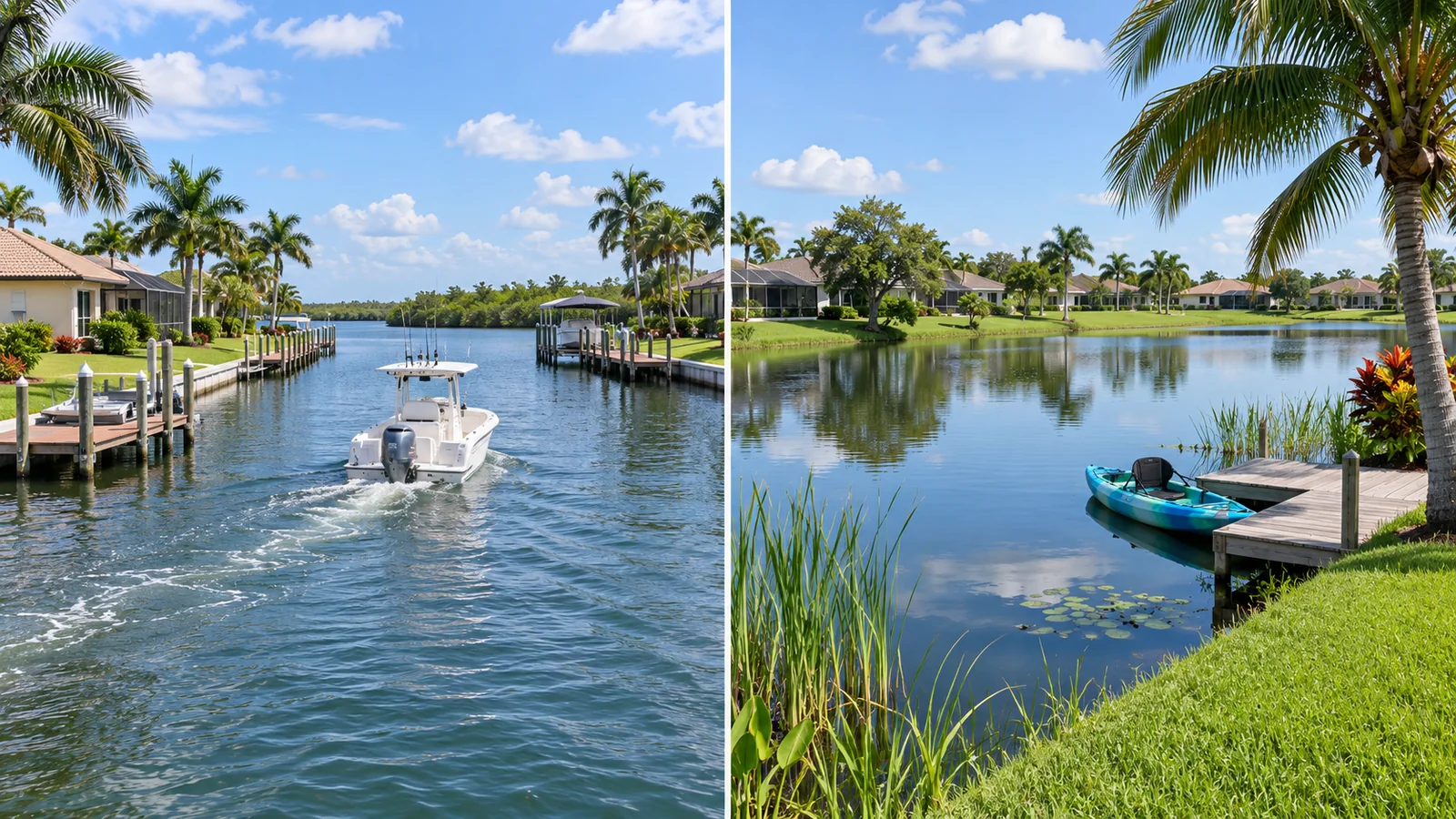
When you search for a Cape Coral waterfront home, start with a simple question: do you want to look at the water, explore a local canal or leave your backyard dock for open-water boating? Those goals can lead to different properties, even when the listing photographs look similar.
The City publishes separate freshwater and saltwater canal maps. Use those maps to start your research, then investigate the actual address and route. A waterfront label by itself does not answer where your boat can go.
1. Understand what the listing is describing
Think of the listing description as a starting point to verify, rather than a navigation plan. Ask the agent to identify the waterway and explain the advertised access in terms of your intended use.
- Gulf-access home: investigate the complete boat route toward open water, including every connection and restriction that could affect your vessel.
- Freshwater canal home: confirm the connected canal or lake system and the activities it supports. Do not assume it provides a boat route to the Gulf.
- Water-view home: verify whether the property includes usable shoreline, a dock or any boating access at all.
Begin with Cape Coral’s official Maps page, which lists freshwater and saltwater canals as well as streets-and-canals mapping. The City cautions that its maps may require interpretation with staff. An online map is useful for screening homes, but it does not establish clearance, depth or suitability for a specific boat.
2. Trace the entire route, not the nearest blue line
For each property you are seriously considering, follow the route from the proposed dock to the destination you actually expect to use. Note every bridge and connection along the way. Then identify which questions require a current answer from the City, a marine professional or another relevant authority.
- What is the intended route from the property to open water?
- Are there fixed bridges or other structures along that route?
- Are there operating restrictions or access features that need checking?
- What are the current depth and clearance questions for the vessel?
- How does the trip feel at lawful speeds, including docking and departure?
“Minutes to open water” is only useful when you understand the route, vessel and conditions behind that description. Compare the journey you would actually make rather than a straight line on a map or an estimate based on someone else’s boat.
The City’s Canal Dredging Project page is another research starting point for survey information and project updates. Check the date and geographic coverage of any information you use. A general dredging program is not a guarantee of conditions beside a particular dock.
3. Check the boat you own—or plan to buy
Send Captain Kris a basic vessel profile before you build a property shortlist. Include overall length, beam, loaded draft and air draft with the equipment configured as you intend to operate it. If you are still shopping for a boat, describe the models or dimensions under consideration.
A small center console and a boat with a tall fixed structure can raise different questions at the same property. A future boat upgrade can also change which routes and dock arrangements need investigation. Avoid narrowing the search around a boat you do not expect to keep.
At the dock, request the lift’s documentation and have its suitability evaluated for the vessel’s actual loaded weight and dimensions. Ask about the docking arrangement, room to maneuver and waterfront electrical condition. Do not infer lift capacity from appearance.
Use our waterfront home boat-fit checklist to keep the vessel, dock and route questions together. A route preview can add context, but it does not replace current navigation information or the appropriate inspections.
4. Compare the whole home and the waterfront
The right choice depends on how you want to use the property. A buyer who plans to trailer a boat may evaluate access differently from a buyer who wants frequent departures from a backyard lift. Someone seeking a water view may place more weight on the outdoor setting than on a specific boat route.
Give every finalist the same review. Ask for seawall, dock and lift records; clarify inspection scope; investigate permit questions; and obtain property-specific estimates for recommended work. Request current information about applicable assessments and other property expenses instead of carrying one home’s assumptions into the next comparison.
Also spend time on the ordinary parts of living there: the floor plan, outdoor space, storage, driving routes and the way you would arrive with boating equipment. Waterfront access matters most when it supports the life you actually want to build.
5. Make the shortlist useful before scheduling tours
For three or four candidate homes, create one comparison sheet with these fields:
- Address and waterway: identify the parcel and the mapped canal system.
- Boating goal: describe the intended activity and destination.
- Route: list the path, structures and outstanding access questions.
- Boat fit: record the vessel dimensions and the items still awaiting verification.
- Waterfront condition: list the records, inspections and professional opinions needed.
- Everyday fit: note the home features and routines that matter to you.
Mark an unverified detail as “to confirm.” That makes the next tour more productive and avoids treating an unanswered question as a positive feature.
Frequently asked questions
Does every Cape Coral canal home have Gulf access?
Do not assume that it does. Confirm the waterway classification and investigate whether there is a usable route from that particular property for your vessel.
Does “Gulf access” mean there are no bridges?
Do not treat those descriptions as interchangeable. Trace the route and verify the relevant bridges, clearance and other conditions before relying on the access description.
Which type of waterfront home is better?
Start with your use. A water view, local canal recreation and regular open-water departures are different priorities. Compare homes against your priorities and the details you can verify.
Find a waterfront home that fits your boating plans.
Send Captain Kris the addresses you are considering, your boat details and where you want to spend time on the water. Build a focused search before you spend a day touring.
Plan your waterfront home search · Call 239-663-0633
Explore Captain Kris’s waterfront buyer approach · Browse Southwest Florida community guides