Waterfront buying · Boat fit
Does This Waterfront Home Fit Your Boat?
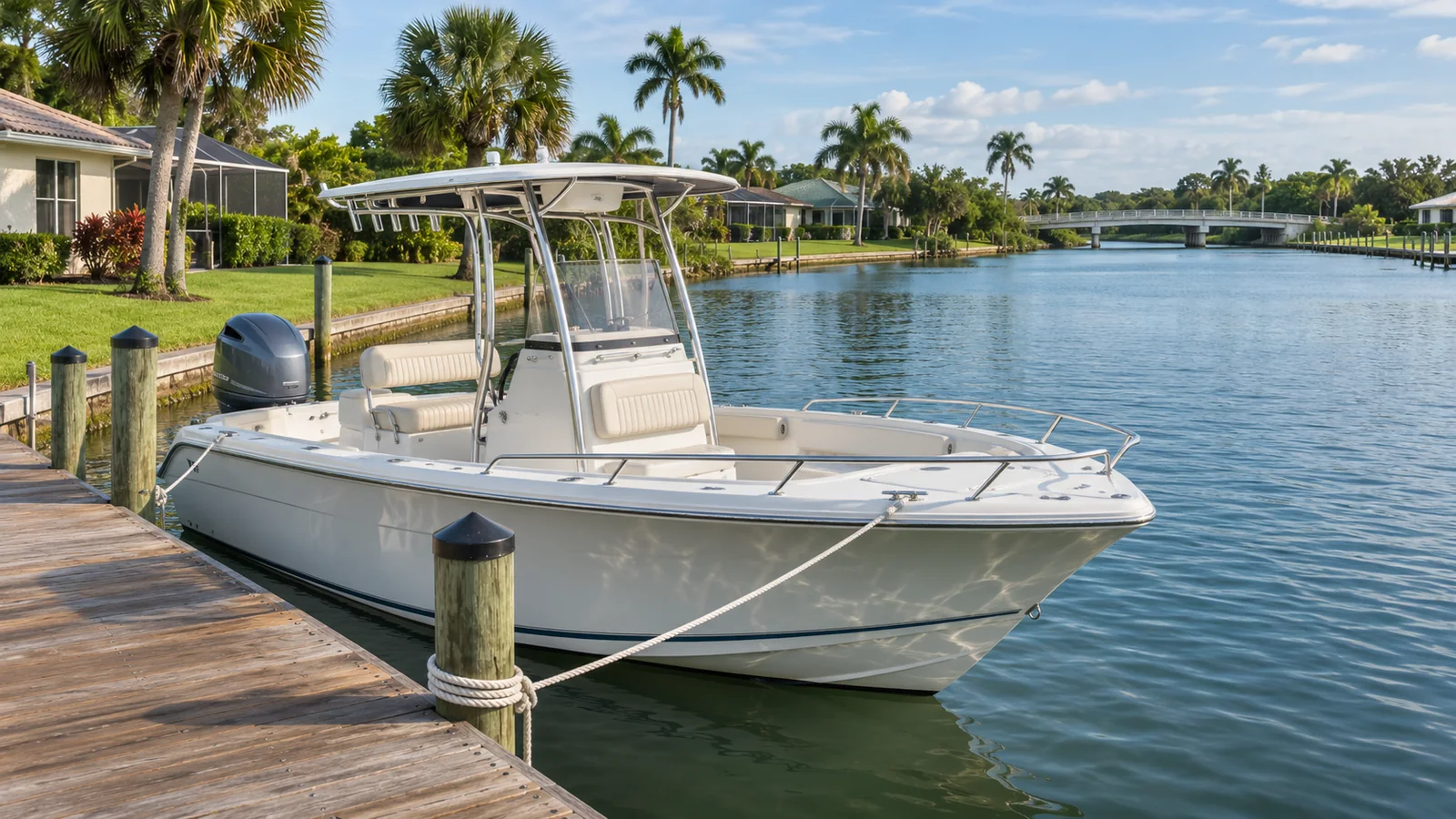
A waterfront listing can look perfect from the living room and still leave unanswered questions about your boat. Before you fall in love with the view, build a second checklist: one for the trip from the dock to the places you actually want to go.
For a Punta Gorda or Port Charlotte home search, a useful starting point is a three-part match: the vessel, the property, and the route. A favorable answer in one part does not settle the other two.
1. Write down the boat you will actually use
Record overall length, beam, loaded draft, and height above the water. Include the configuration you expect to operate: hardtop, antennas, outriggers, engines, fuel, water, and typical passengers. A model name or the number on the hull is not a complete fit assessment.
If you are shopping for a boat later, bring the likely models into the home conversation now. A property that suits today’s runabout may need a different review for a future cabin cruiser or sailboat.
2. Trace the complete route
Follow the route from the individual dock through the canal system and toward your intended destination. Identify bridges, turns, narrow sections, channel connections, and any restrictions that need checking. “Waterfront” describes a location; it does not establish a vessel’s access to open water.
The Florida Fish and Wildlife Conservation Commission’s boating guides provide useful regional maps and educational information. Use them for orientation alongside current navigation information and a property-specific review.
3. Separate water depth from bridge clearance
More water can help with depth while reducing the space beneath a fixed bridge. Compare the boat’s loaded draft and air draft with verified information for the route, including the conditions under which measurements were taken.
NOAA explains that tide predictions describe astronomical tides and do not predict every short-term effect of wind, rain, or runoff. A predicted tide at a nearby station is not a guarantee of depth at a particular dock.
4. Review the dock and lift separately
Ask for available permits, plans, installation records, maintenance information, and lift specifications. A posted lift rating alone does not establish suitability for your boat’s actual loaded weight, hull, bunks, and installation. Have the appropriate marine contractor or inspector evaluate condition and compatibility.
Also consider how you will board, load provisions, turn, tie up, wash down, and secure the vessel. These everyday details can matter as much as the view.
5. Turn unknowns into a verification list
- Which dimensions came from current manufacturer or vessel records?
- Which access claims have a source and measurement date?
- Which inspections, records, and professional opinions are still needed?
- Would the property still fit if your boating plans change?
A boat-based neighborhood preview can add perspective when conditions and arrangements allow. It complements documentation and professional inspections; one successful trip cannot establish year-round access.
Bring a property link and your boat’s specifications to the first conversation. Start with the waterfront buying checklist, then compare the home and the water together.
Boat-fit questions buyers ask
Does a waterfront address guarantee open-water access?
No. Trace the specific property’s route and investigate connections, bridges, depths, restrictions, and current conditions for your vessel.
Which boat measurements should I send?
Start with overall length, beam, loaded draft, and air draft in your intended operating configuration. Include the model and any equipment that changes height or weight.
Can a boat preview replace an inspection?
No. It adds context to the neighborhood and route. Marine condition, permits, surveys, and navigation questions still need the appropriate records and professionals.
Start with your waterfront plans.
Send Captain Kris the property, your boat details, and what you want your days on the water to look like.